Locomotive Fleet Management
A case study detailing the design and implementation of a new ERP system to optimize locomotive fleet operations at Severstal.
A case study detailing the design and implementation of a new ERP system to optimize locomotive fleet operations at Severstal.

2024
Product Designer
This case study details my experience designing and implementing a new Enterprise Resource Planning (ERP) system for Severstal, focusing on streamlining their locomotive fleet management. I worked as the lead UX/UI designer on this project, collaborating closely with developers, stakeholders, and end-users throughout the process. The goal was to create a user-friendly, efficient system that addressed the challenges of manual processes and disparate tools within the existing locomotive management workflows.
Severstal's locomotive fleet management faced significant inefficiencies due to manual processes and a lack of integrated tools. Scheduling was cumbersome, transparency was low, and monitoring locomotive health and personnel performance was challenging. Onboarding new users and managing compliance documentation were also time-consuming. This led to delays, errors, and reduced operational efficiency. Interviews with stakeholders revealed frustration with the existing system, highlighting the urgent need for a streamlined solution.
Our primary objectives were to automate and improve the entire locomotive management lifecycle, enhancing efficiency and transparency across all roles. We aimed to reduce task completion times, improve user satisfaction, and provide real-time data-driven insights. Key Performance Indicators (KPIs) included task completion rate, System Usability Scale (SUS) score, and time-on-task.
Extensive user research was conducted, including individual interviews with users across various roles (System Administrator, Locomotive Park Administrator, Task Executors, Approvers, Dispatchers, Maintenance Managers, etc.). This allowed us to thoroughly understand their workflows, pain points, and needs. We created user personas to represent the diverse user base and their individual requirements. Competitive analysis of existing fleet management systems helped inform our design decisions.
We used a combination of brainstorming sessions, sketching, and wireframing to explore potential design solutions. Several design concepts were iteratively refined, based on user feedback gathered through usability testing. We focused on creating a clean, intuitive interface tailored for both desktop and tablet use, leveraging the Severstal Design System for visual consistency.
The design process involved creating low-fidelity wireframes to map user flows, followed by high-fidelity prototypes to test the interface with users. Iterative prototyping and usability testing played a crucial role in refining the design. We carefully considered the visual design, ensuring a consistent experience across the platform. The final design was carefully optimized for both desktop and tablet environments, providing a seamless experience for all users.
One major challenge was the lack of clearly defined workflows and roles within the organization. To overcome this, we spent considerable time conducting user interviews and mapping user journeys to establish clear processes and expectations. This collaborative approach ensured alignment amongst stakeholders and streamlined the design and development process.
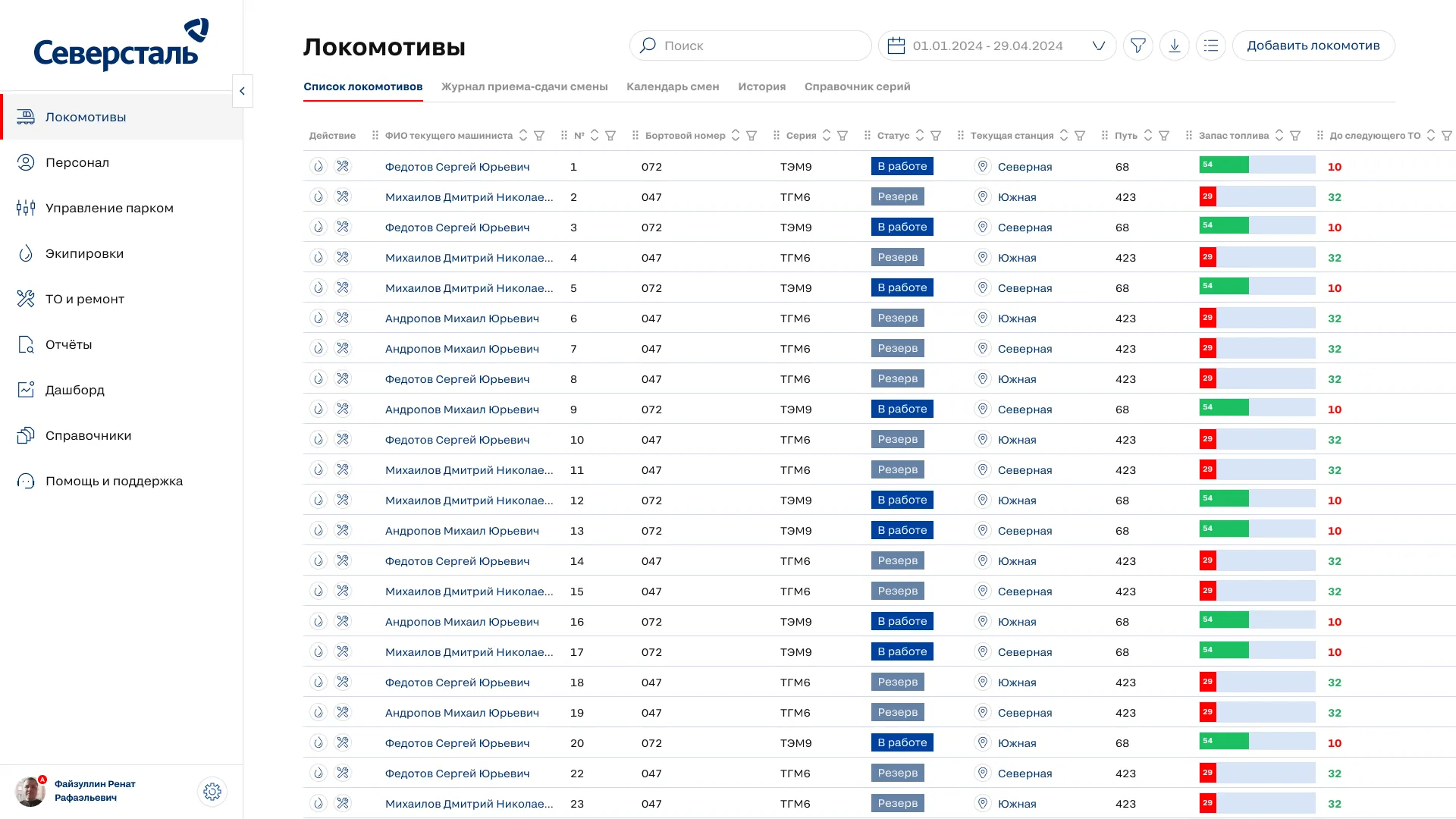
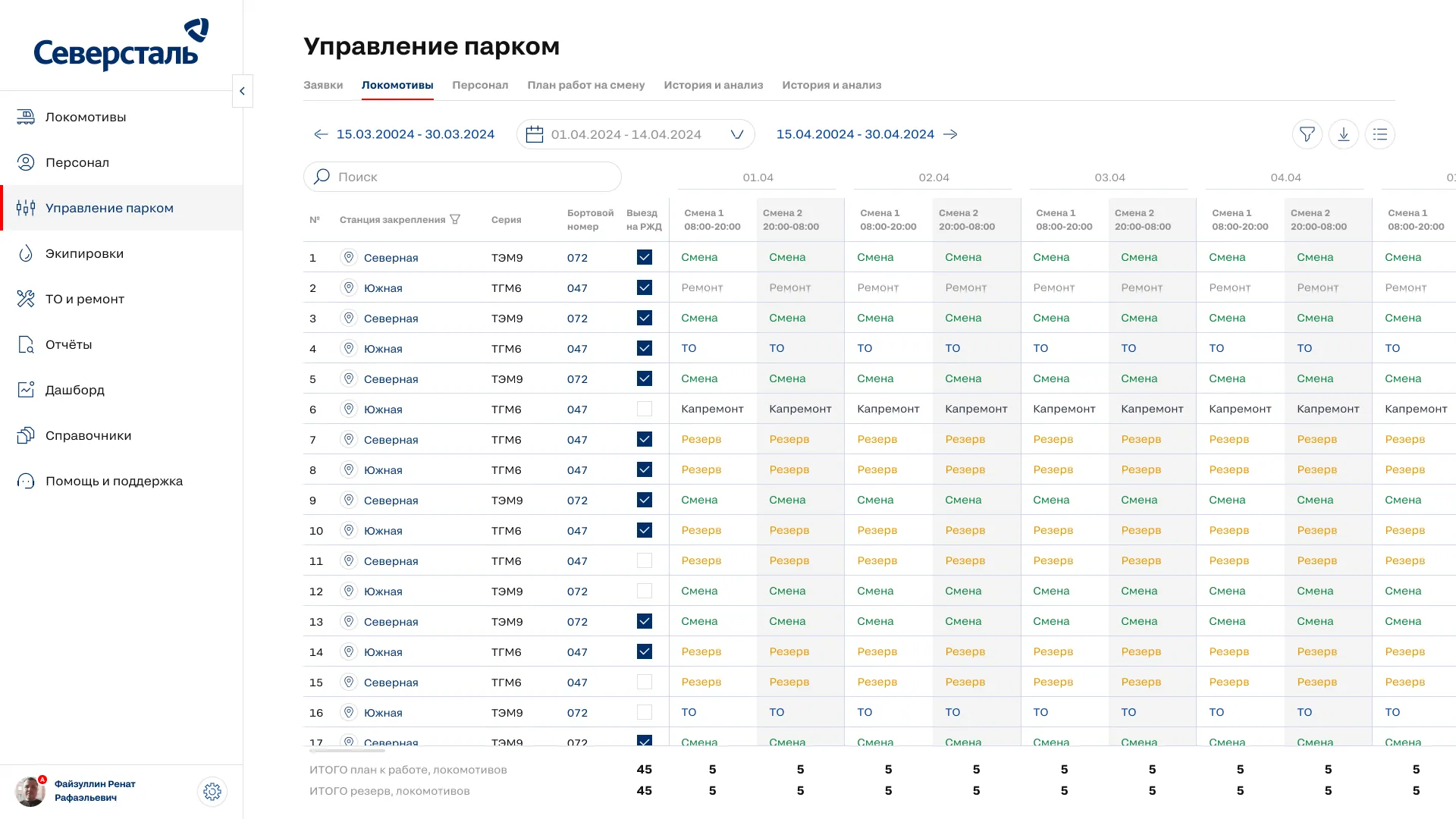
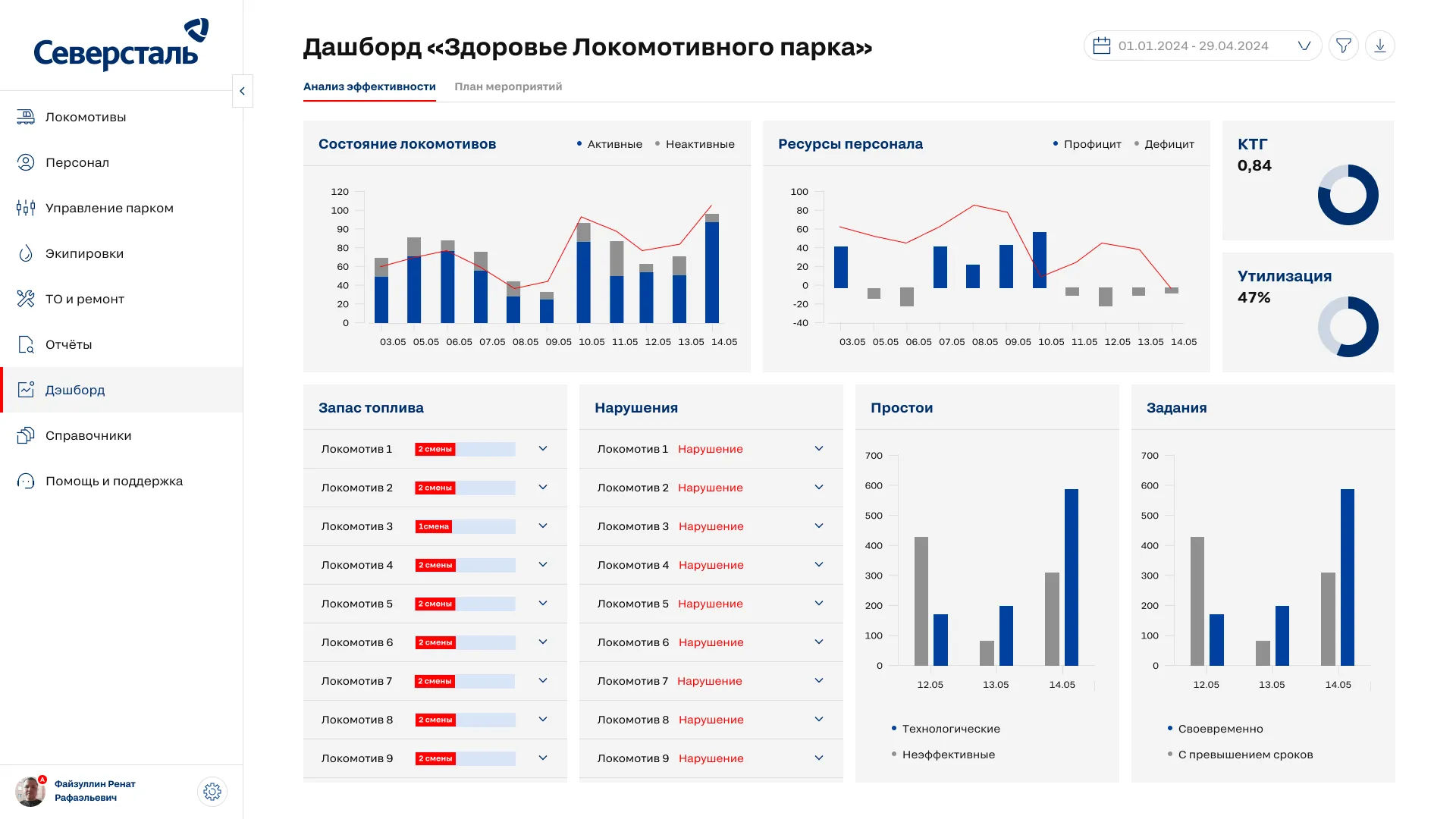
The results showed a significant improvement in task efficiency and user satisfaction. Before, tasks like scheduling and locomotive monitoring were manual and time-consuming, taking 30-40% longer to complete. After implementing the new design, task completion time decreased by 30%, and the System Usability Scale (SUS) score improved to 85/100. The design impacted the metrics by increasing operational efficiency, reducing errors, and providing a streamlined, intuitive experience for all roles.
This project reinforced the importance of early and thorough user research, iterative design, and close collaboration with stakeholders. Prioritizing discovery sessions and ensuring clear communication at the outset of a project is crucial for success. In future projects, I would continue to emphasize user-centered design principles and prioritize usability testing throughout the design process.
The Severstal Locomotive ERP System significantly improved locomotive fleet management, boosting efficiency, transparency, and user satisfaction. Future plans include expanding the system's functionality and integrating additional data sources to provide even more comprehensive insights into fleet performance. The success of this project demonstrates the power of user-centered design in creating impactful solutions for complex organizational challenges.
A case study detailing the design and implementation of a new ERP system to optimize locomotive fleet operations at Severstal.
2024
Product Designer
This case study details my experience designing and implementing a new Enterprise Resource Planning (ERP) system for Severstal, focusing on streamlining their locomotive fleet management. I worked as the lead UX/UI designer on this project, collaborating closely with developers, stakeholders, and end-users throughout the process. The goal was to create a user-friendly, efficient system that addressed the challenges of manual processes and disparate tools within the existing locomotive management workflows.
Severstal's locomotive fleet management faced significant inefficiencies due to manual processes and a lack of integrated tools. Scheduling was cumbersome, transparency was low, and monitoring locomotive health and personnel performance was challenging. Onboarding new users and managing compliance documentation were also time-consuming. This led to delays, errors, and reduced operational efficiency. Interviews with stakeholders revealed frustration with the existing system, highlighting the urgent need for a streamlined solution.
Our primary objectives were to automate and improve the entire locomotive management lifecycle, enhancing efficiency and transparency across all roles. We aimed to reduce task completion times, improve user satisfaction, and provide real-time data-driven insights. Key Performance Indicators (KPIs) included task completion rate, System Usability Scale (SUS) score, and time-on-task.
Extensive user research was conducted, including individual interviews with users across various roles (System Administrator, Locomotive Park Administrator, Task Executors, Approvers, Dispatchers, Maintenance Managers, etc.). This allowed us to thoroughly understand their workflows, pain points, and needs. We created user personas to represent the diverse user base and their individual requirements. Competitive analysis of existing fleet management systems helped inform our design decisions.
We used a combination of brainstorming sessions, sketching, and wireframing to explore potential design solutions. Several design concepts were iteratively refined, based on user feedback gathered through usability testing. We focused on creating a clean, intuitive interface tailored for both desktop and tablet use, leveraging the Severstal Design System for visual consistency.
The design process involved creating low-fidelity wireframes to map user flows, followed by high-fidelity prototypes to test the interface with users. Iterative prototyping and usability testing played a crucial role in refining the design. We carefully considered the visual design, ensuring a consistent experience across the platform. The final design was carefully optimized for both desktop and tablet environments, providing a seamless experience for all users.
One major challenge was the lack of clearly defined workflows and roles within the organization. To overcome this, we spent considerable time conducting user interviews and mapping user journeys to establish clear processes and expectations. This collaborative approach ensured alignment amongst stakeholders and streamlined the design and development process.
The results showed a significant improvement in task efficiency and user satisfaction. Before, tasks like scheduling and locomotive monitoring were manual and time-consuming, taking 30-40% longer to complete. After implementing the new design, task completion time decreased by 30%, and the System Usability Scale (SUS) score improved to 85/100. The design impacted the metrics by increasing operational efficiency, reducing errors, and providing a streamlined, intuitive experience for all roles.
This project reinforced the importance of early and thorough user research, iterative design, and close collaboration with stakeholders. Prioritizing discovery sessions and ensuring clear communication at the outset of a project is crucial for success. In future projects, I would continue to emphasize user-centered design principles and prioritize usability testing throughout the design process.
The Severstal Locomotive ERP System significantly improved locomotive fleet management, boosting efficiency, transparency, and user satisfaction. Future plans include expanding the system's functionality and integrating additional data sources to provide even more comprehensive insights into fleet performance. The success of this project demonstrates the power of user-centered design in creating impactful solutions for complex organizational challenges.
A case study detailing the design and implementation of a new ERP system to optimize locomotive fleet operations at Severstal.
2024
Product Designer
This case study details my experience designing and implementing a new Enterprise Resource Planning (ERP) system for Severstal, focusing on streamlining their locomotive fleet management. I worked as the lead UX/UI designer on this project, collaborating closely with developers, stakeholders, and end-users throughout the process. The goal was to create a user-friendly, efficient system that addressed the challenges of manual processes and disparate tools within the existing locomotive management workflows.
Severstal's locomotive fleet management faced significant inefficiencies due to manual processes and a lack of integrated tools. Scheduling was cumbersome, transparency was low, and monitoring locomotive health and personnel performance was challenging. Onboarding new users and managing compliance documentation were also time-consuming. This led to delays, errors, and reduced operational efficiency. Interviews with stakeholders revealed frustration with the existing system, highlighting the urgent need for a streamlined solution.
Our primary objectives were to automate and improve the entire locomotive management lifecycle, enhancing efficiency and transparency across all roles. We aimed to reduce task completion times, improve user satisfaction, and provide real-time data-driven insights. Key Performance Indicators (KPIs) included task completion rate, System Usability Scale (SUS) score, and time-on-task.
Extensive user research was conducted, including individual interviews with users across various roles (System Administrator, Locomotive Park Administrator, Task Executors, Approvers, Dispatchers, Maintenance Managers, etc.). This allowed us to thoroughly understand their workflows, pain points, and needs. We created user personas to represent the diverse user base and their individual requirements. Competitive analysis of existing fleet management systems helped inform our design decisions.
We used a combination of brainstorming sessions, sketching, and wireframing to explore potential design solutions. Several design concepts were iteratively refined, based on user feedback gathered through usability testing. We focused on creating a clean, intuitive interface tailored for both desktop and tablet use, leveraging the Severstal Design System for visual consistency.
The design process involved creating low-fidelity wireframes to map user flows, followed by high-fidelity prototypes to test the interface with users. Iterative prototyping and usability testing played a crucial role in refining the design. We carefully considered the visual design, ensuring a consistent experience across the platform. The final design was carefully optimized for both desktop and tablet environments, providing a seamless experience for all users.
One major challenge was the lack of clearly defined workflows and roles within the organization. To overcome this, we spent considerable time conducting user interviews and mapping user journeys to establish clear processes and expectations. This collaborative approach ensured alignment amongst stakeholders and streamlined the design and development process.
The results showed a significant improvement in task efficiency and user satisfaction. Before, tasks like scheduling and locomotive monitoring were manual and time-consuming, taking 30-40% longer to complete. After implementing the new design, task completion time decreased by 30%, and the System Usability Scale (SUS) score improved to 85/100. The design impacted the metrics by increasing operational efficiency, reducing errors, and providing a streamlined, intuitive experience for all roles.
This project reinforced the importance of early and thorough user research, iterative design, and close collaboration with stakeholders. Prioritizing discovery sessions and ensuring clear communication at the outset of a project is crucial for success. In future projects, I would continue to emphasize user-centered design principles and prioritize usability testing throughout the design process.
The Severstal Locomotive ERP System significantly improved locomotive fleet management, boosting efficiency, transparency, and user satisfaction. Future plans include expanding the system's functionality and integrating additional data sources to provide even more comprehensive insights into fleet performance. The success of this project demonstrates the power of user-centered design in creating impactful solutions for complex organizational challenges.